menu
KONKELL CHAINSAW SHARPENER
Category Archive

Chainsaw Sharpening

Chainsaw Sharpener for Beginners: Choose a Setup You Can Repeat

Chainsaw Sharpener for Beginners: Choose a Setup You Can Repeat

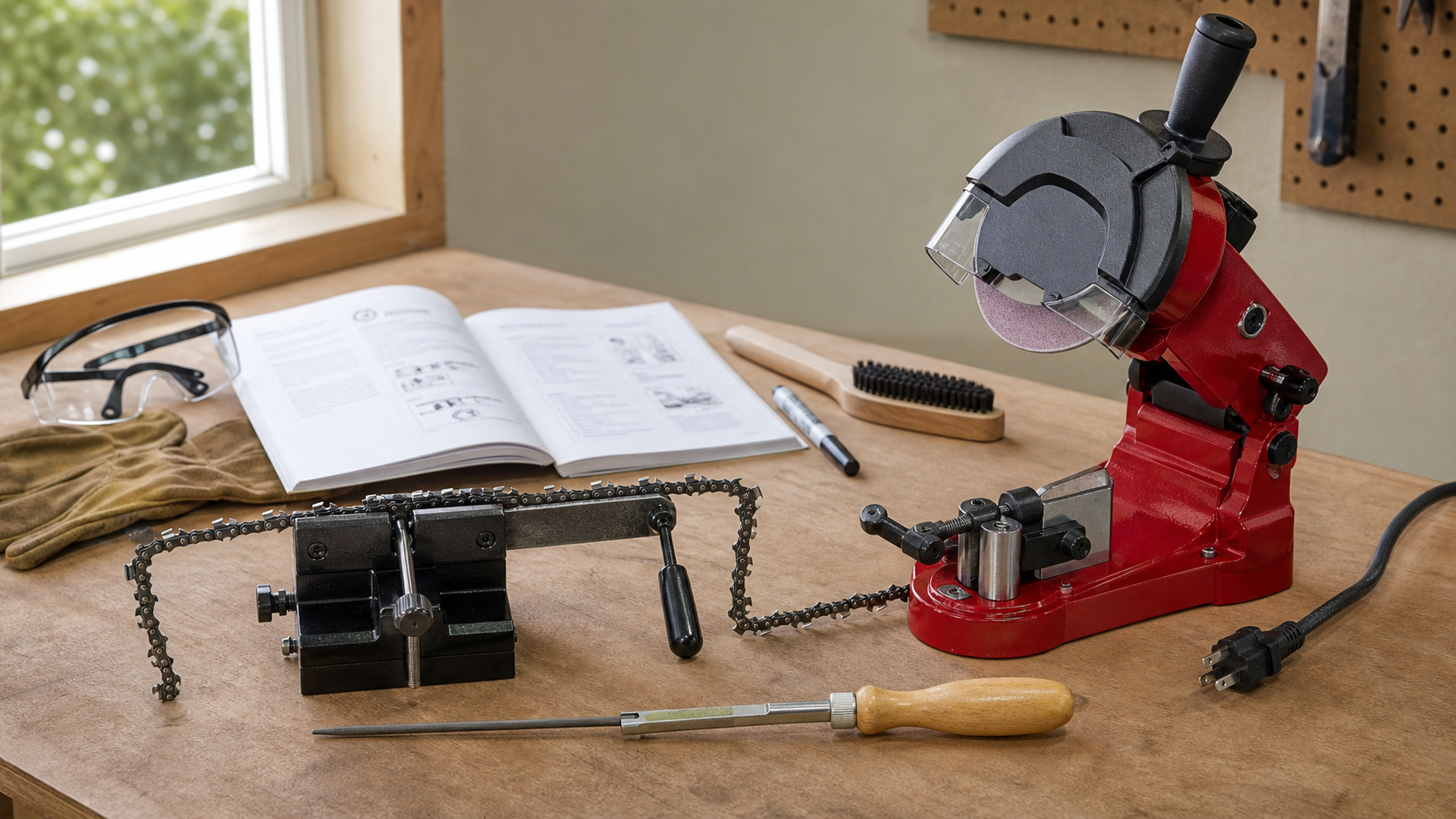
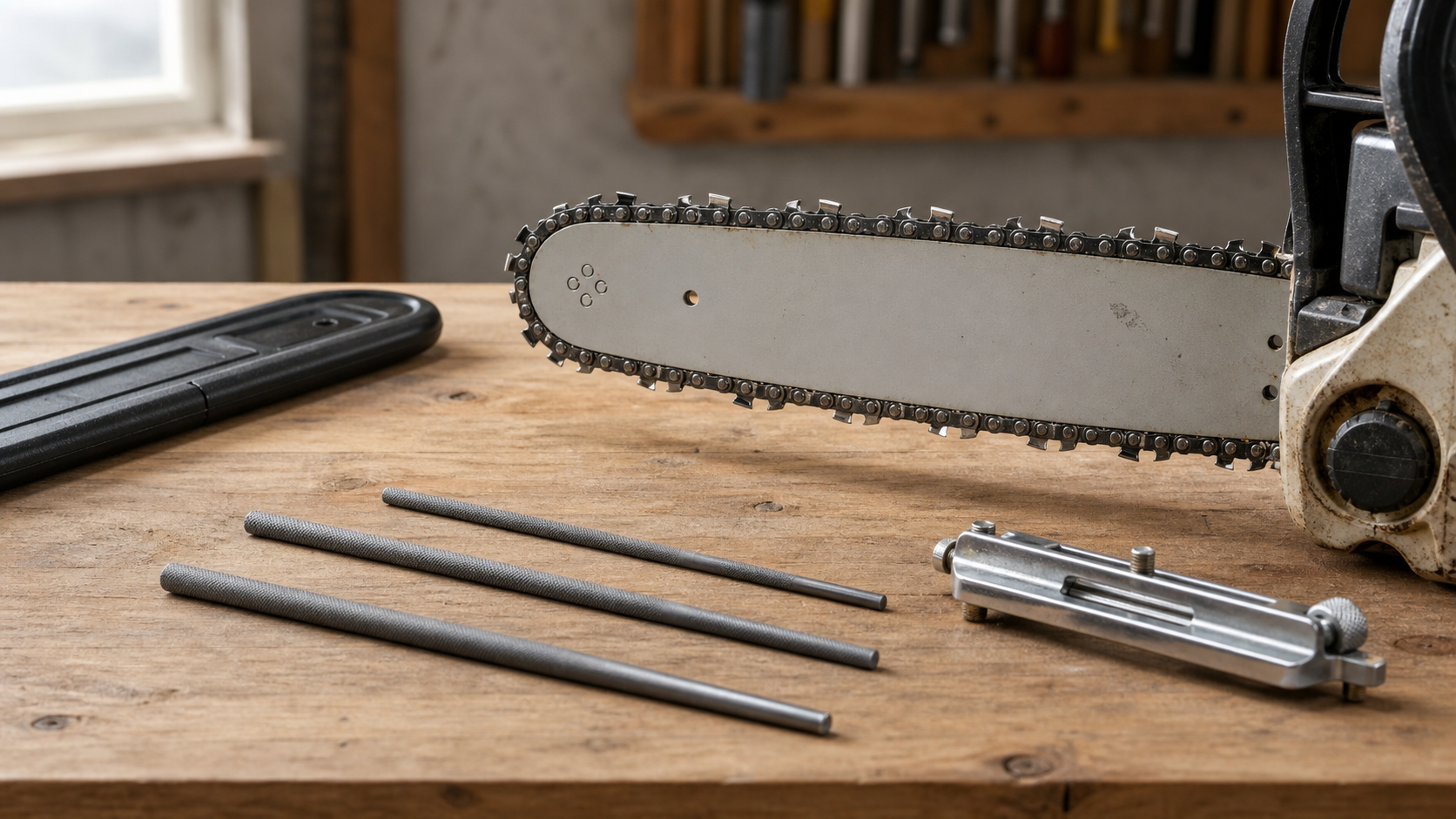
The best chainsaw sharpener for a beginner is a chain-matched guided file for occasional touch-ups, or a bench grinder when several removable chains need the same repeatable fixture. Choose only after identifying the chain and deciding whether the real job is portable maintenance, routine bench work, or recovery from uneven damage. Motor power and accessory count cannot answer that question. The useful beginner choice is the tool whose file or wheel, holding method, and instructions all match the chain—and whose first-cutter result can be inspected before the setup is repeated.

Read More arrow_forward
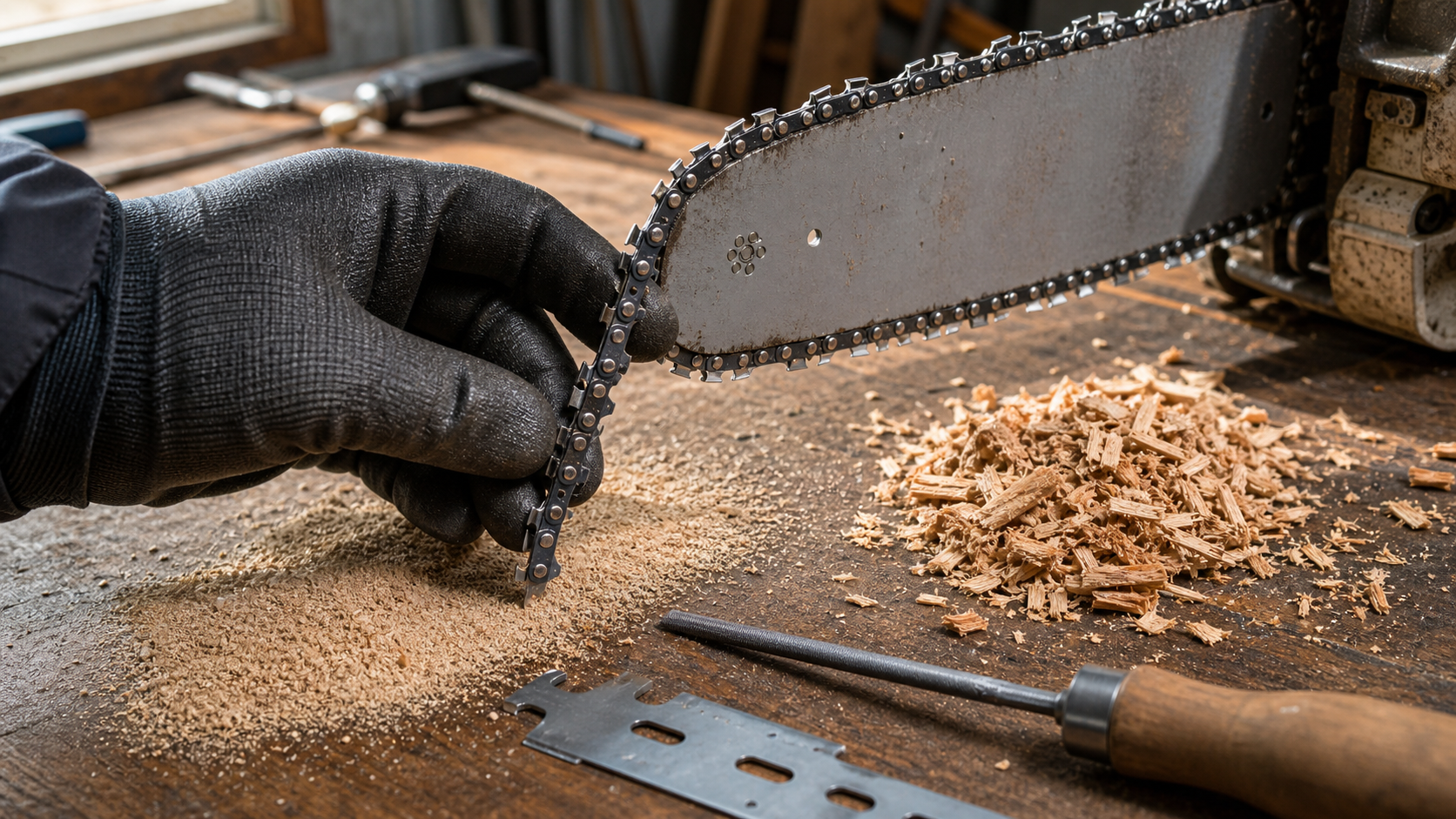
How to Sharpen a Chainsaw Chain by Hand Without Guessing

How to Sharpen a Chainsaw Chain by Hand Without Guessing

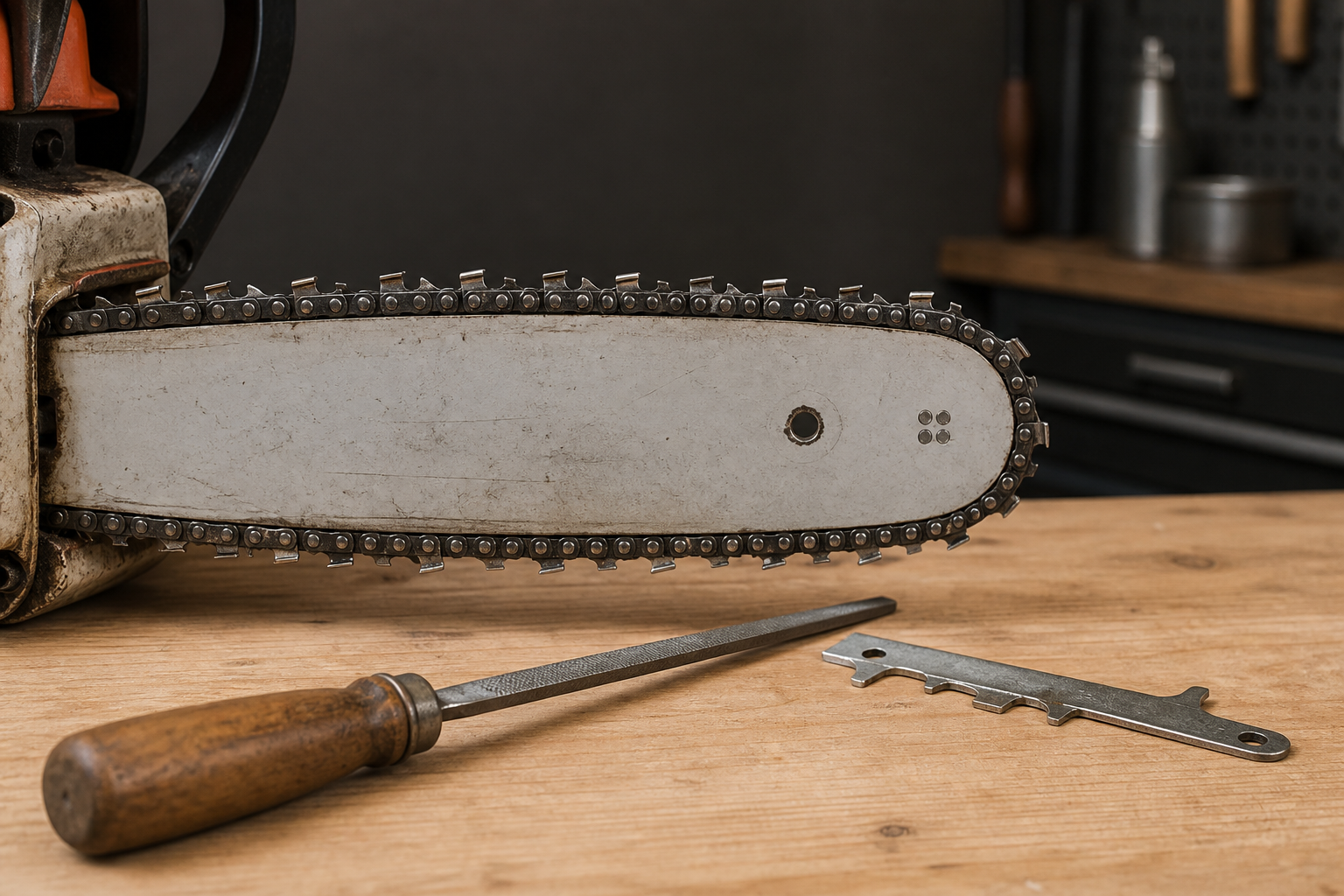
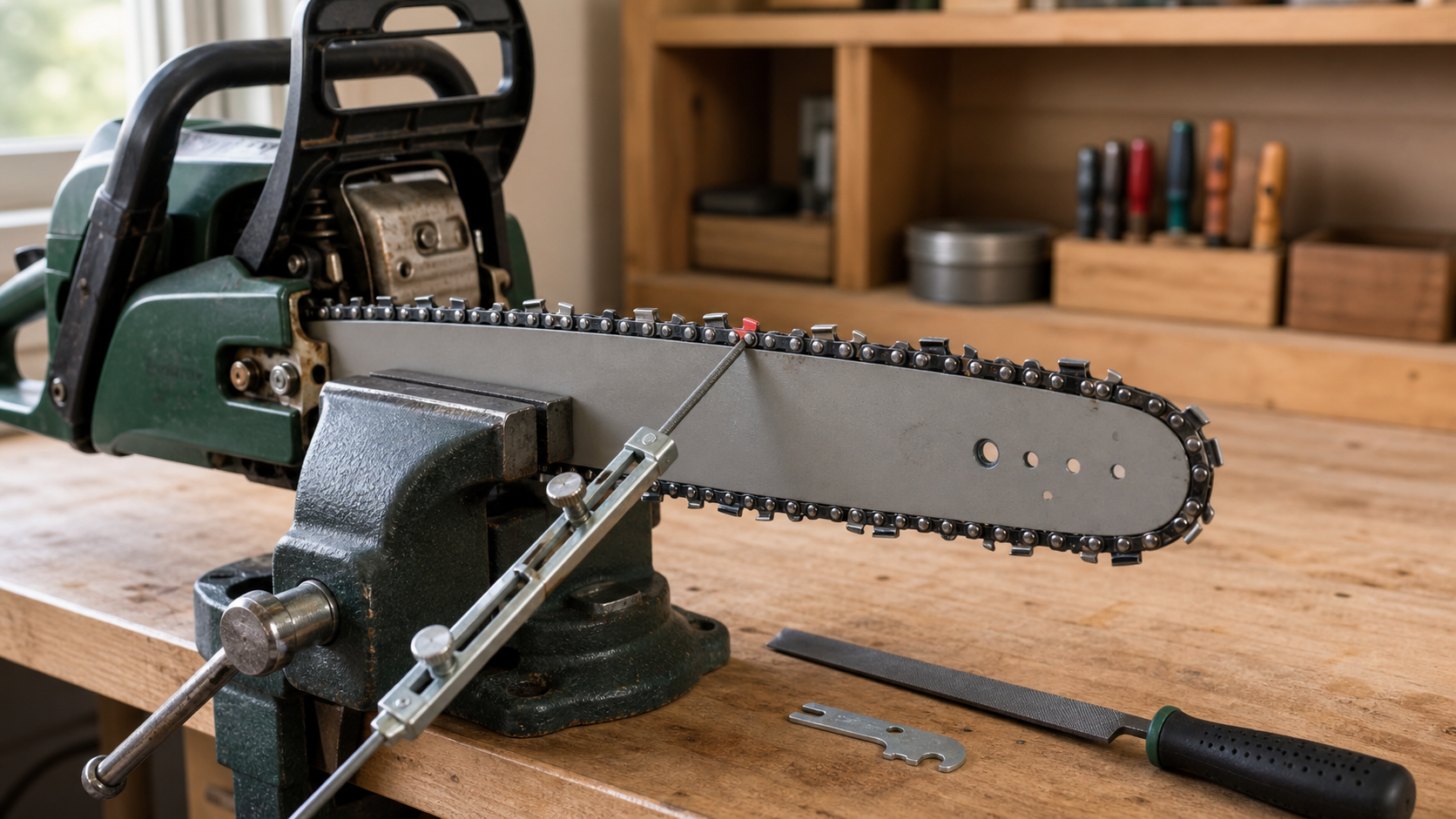
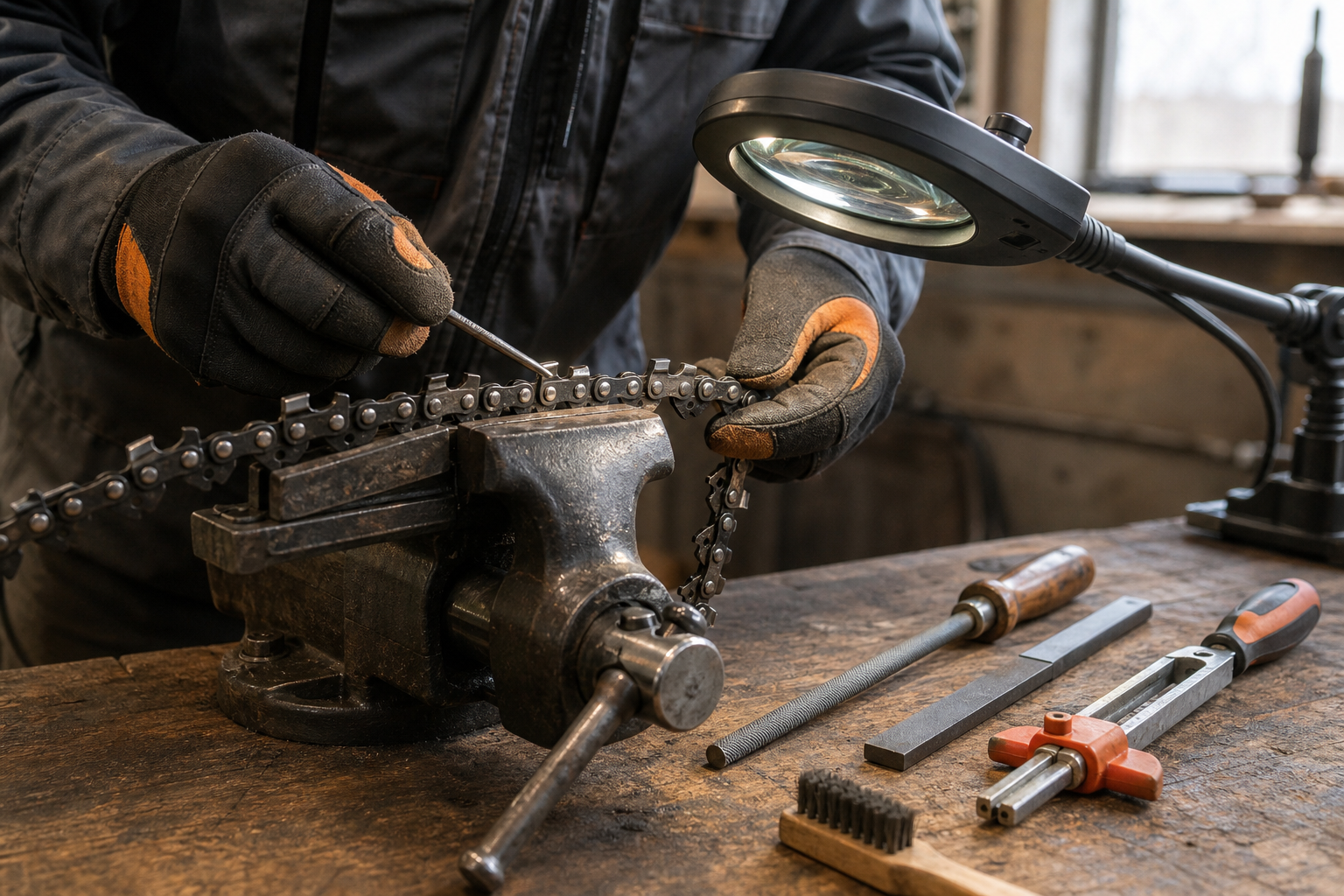
To sharpen a chainsaw chain by hand, identify the exact chain, use the round file and guide specified for it, secure the stopped saw, and sharpen a marked reference cutter before matching the others. Check the depth gauges with the matching gauge after the cutters; do not lower them by eye or use a universal angle for every chain.

Read More arrow_forward
How to Sharpen a Chainsaw in the Field: Touch Up or Swap the Chain?

How to Sharpen a Chainsaw in the Field: Touch Up or Swap the Chain?

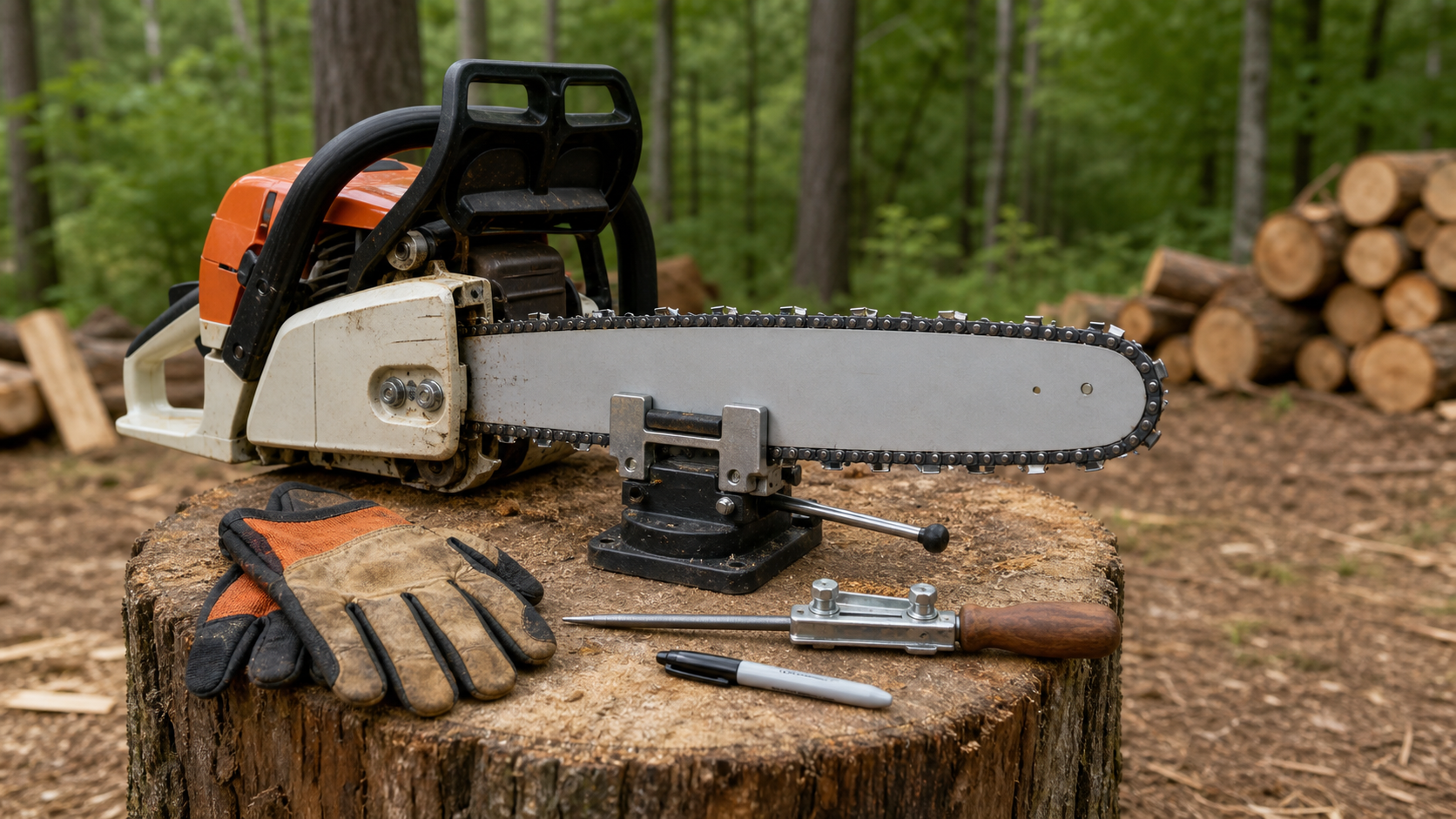
To sharpen a chainsaw in the field, stop and cool the saw, secure the guide bar so both hands are free, and use the file and guide specified for the exact chain. Treat field filing as a light edge touch-up; swap the chain or stop work when you find cracks, damaged links, uncertain chain identity, or cutters that need major correction.

Read More arrow_forward
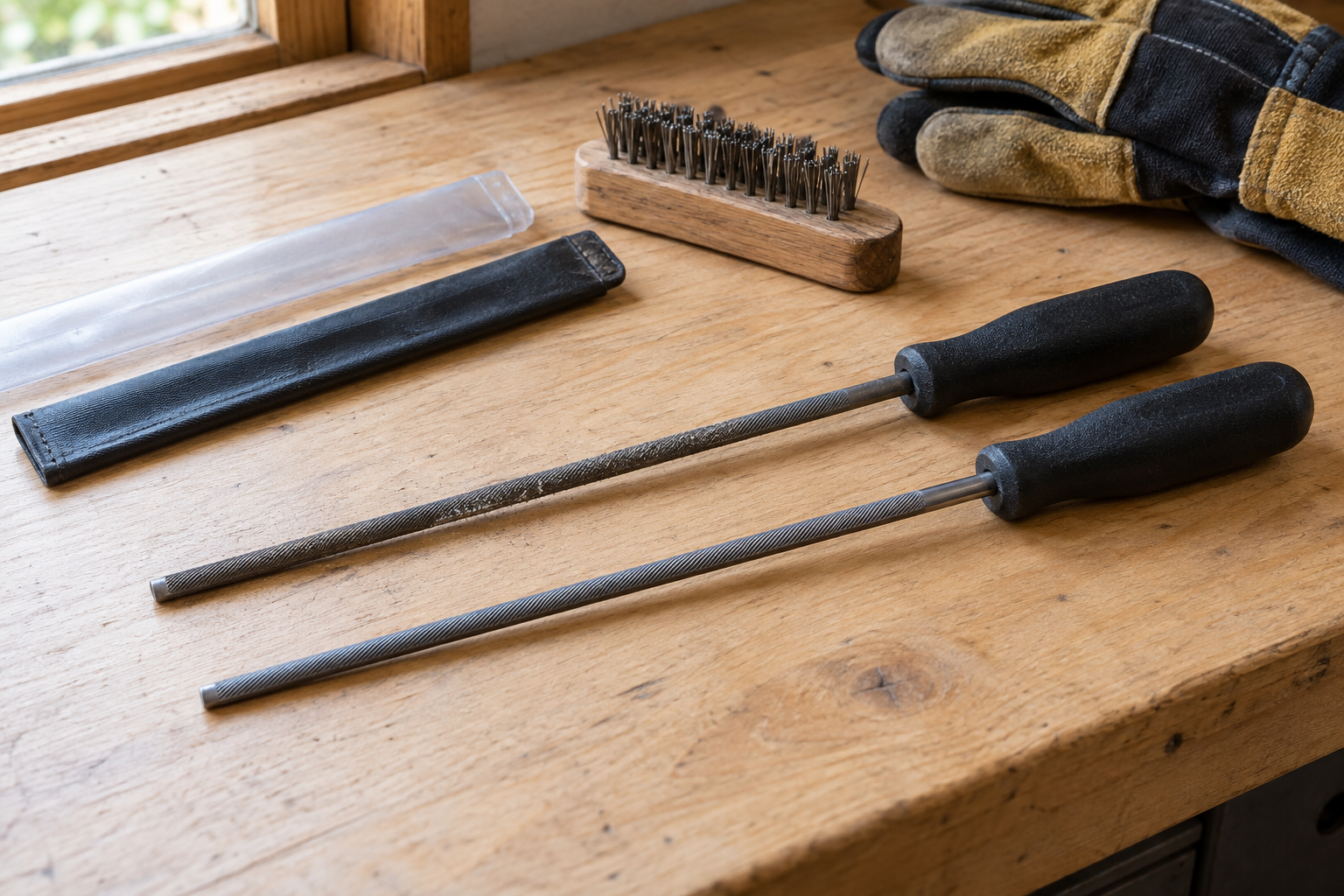
Chainsaw File Size Guide: Match the Chain, Not Just the Pitch

Chainsaw File Size Guide: Match the Chain, Not Just the Pitch

The correct chainsaw file size is the diameter specified for your exact chain model, not a size guessed from bar length or pitch alone. Find the chain code on the cutter or drive link, the package, or the saw manual; then confirm it in that chain maker’s current filing chart before touching the cutter. Use this identification order A pitch label narrows the search, but it may not finish it. STIHL, for example, specifies different files for standard 3/8-inch chain and 3/8-inch PICCO chain. Husqvarna’s current chart likewise separates mini chain families from full-size chains.

Read More arrow_forward
Chainsaw Cutters Different Lengths? How to Correct the Chain

Chainsaw Cutters Different Lengths? How to Correct the Chain

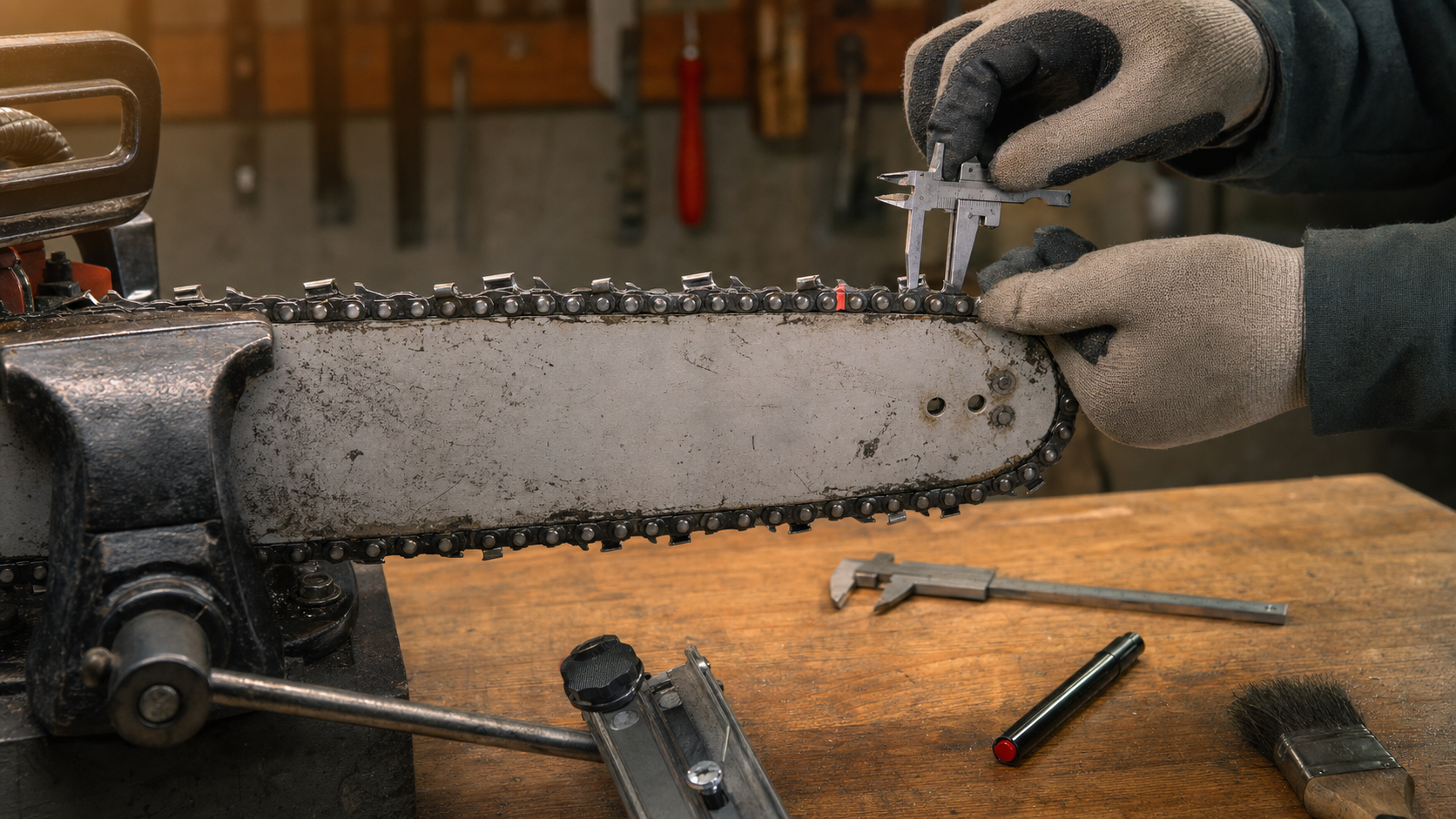
Chainsaw cutters of different lengths need inspection before you file the whole loop shorter. A slight random variation is not the same fault as every left-hand cutter being shorter than every right-hand cutter, and one rocked tooth should not dictate an aggressive correction unless the rest of the chain still has enough service life. The practical goal is a loop with sharp, reasonably consistent cutters and depth gauges checked against the corrected cutter geometry. This bench method helps you decide what to match, what to leave alone, and when the chain is no longer worth reworking.

Read More arrow_forward
Chainsaw Still Dull After Sharpening? Diagnose the Chain Before Filing Again

Chainsaw Still Dull After Sharpening? Diagnose the Chain Before Filing Again

A chainsaw that is still dull after sharpening usually has a cutting edge that was not fully restored, depth gauges that no longer match the shortened cutters, or inconsistent cutter geometry around the loop. Do not start another full sharpening pass until you know which fault you are correcting. This guide is for homeowners, firewood cutters, and workshop users who have just filed or ground a chain but still need to push the saw through clean wood. Put the saw aside, clean the chain enough to see bare metal, and work through the checks in order.

Read More arrow_forward
Chainsaw Sharpener Burns Cutters: Stop Blue Teeth Before They Fail

Chainsaw Sharpener Burns Cutters: Stop Blue Teeth Before They Fail

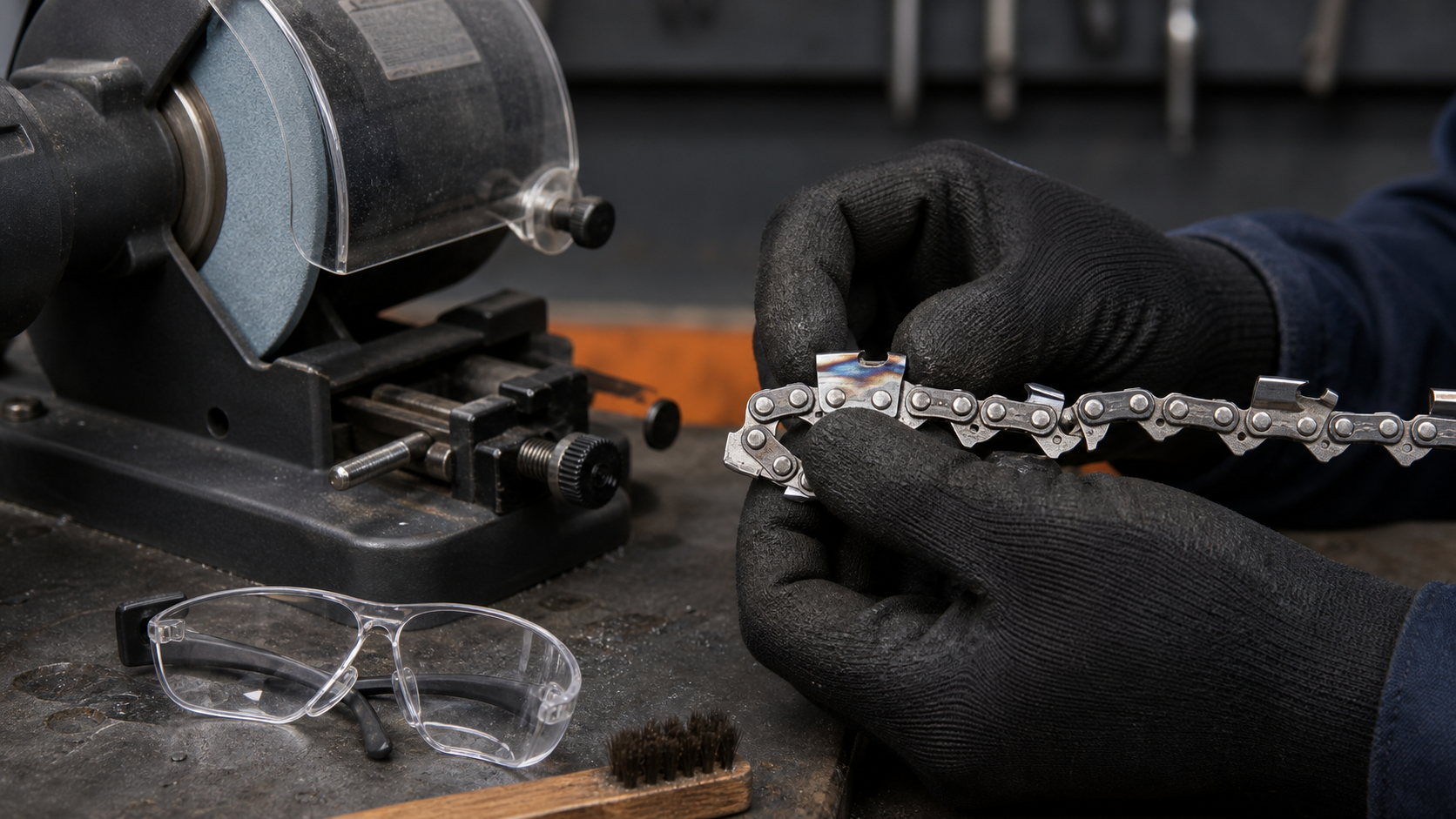
A chainsaw sharpener burns cutters when the grinding wheel puts heat into the cutting edge faster than the metal can shed it. A faint straw, brown, blue, or purple band after grinding is a warning to stop. Long wheel contact, heavy pressure, a glazed wheel, or an incorrect setup can all create that heat. Do not keep grinding the rest of the loop and hope the color will disappear. Mark the affected cutter, switch off the machine, and inspect the chain and grinder. The safest correction starts with finding the cause, not taking another deep pass.

Read More arrow_forward
Chainsaw Making Sawdust After Sharpening: What to Check First

Chainsaw Making Sawdust After Sharpening: What to Check First

A chainsaw that makes fine dust after sharpening is usually not taking a clean bite, even if the cutter tips feel sharp to your finger. A good chain should pull itself into the wood and throw recognizable chips. Powdery dust means something in the cutter edge, depth gauge, bar setup, or cutting conditions is holding the chain back. This guide is for homeowners, firewood cutters, and small-shop users who sharpen their own chains and need a practical bench check before removing more metal.

Read More arrow_forward
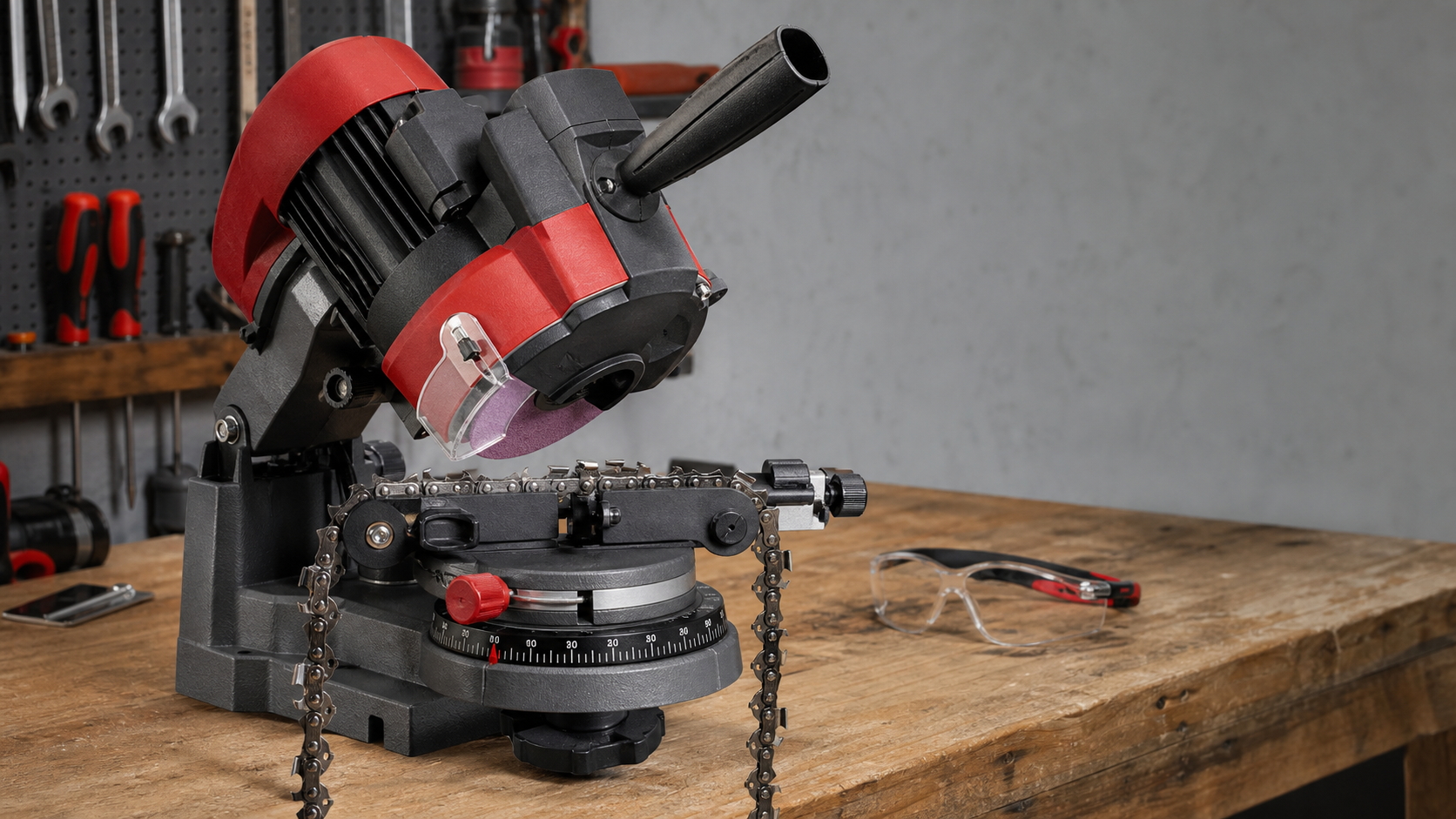
Bench Mounted Chainsaw Sharpener Setup: A Practical First-Chain Checklist

Bench Mounted Chainsaw Sharpener Setup: A Practical First-Chain Checklist

A bench mounted chainsaw sharpener is only accurate after the bench, clamp, chain stop, angle reference, and grinding contact are all working together. If the tool rocks, the chain sits crooked, or the first cutter is rushed, the whole chain can come off uneven even though the sharpener looks powerful enough. This guide is for homeowners, firewood cutters, and small workshops setting up an electric chainsaw chain sharpener. The goal is not to grind fast. The goal is to make the first cutter correct, then repeat that setup across the chain.

Read More arrow_forward
Chainsaw Chain Angle Guide: What to Check Before Filing

Chainsaw Chain Angle Guide: What to Check Before Filing

If you’re a chainsaw user who’s confused by the intricacies of chain angles, depth gauges, and the markings on the chain itself, you’re not alone. This guide is tailored for both novice and experienced users who want to understand how to properly set up and maintain their chainsaw chain angles for optimal performance. By getting the angles and gauges right, you can ensure sharper cuts, greater efficiency, and reduced wear on your tools.

Read More arrow_forward
Chainsaw Depth Gauge Guide: What Rakers Do

Chainsaw Depth Gauge Guide: What Rakers Do

This guide is for chainsaw users who regularly sharpen their cutters but might overlook the importance of depth gauges, also known as rakers. Understanding how these components affect your chainsaw’s performance can improve your cutting efficiency and safety. We’ll explore what depth gauges do, why their settings are crucial, how to check them, signs of improper setup, and how to adjust them cautiously. What Are Depth Gauges and Why They Matter Depth gauges, or rakers, are the small, tooth-like protrusions located in front of each cutting tooth on a chainsaw chain. They control the depth at which each cutter bites into the wood during operation. By regulating this bite, depth gauges significantly impact the overall cutting efficiency.

Read More arrow_forward
Chainsaw Sharpening Mistakes

Chainsaw Sharpening Mistakes

If you’re struggling with poor cutting performance after sharpening your chainsaw, you’re not alone. Many users encounter issues that stem from common sharpening mistakes. This guide is designed for those looking to improve their chainsaw’s effectiveness and safety by pinpointing and correcting these errors. 1. Wrong Angle Symptom: Your chainsaw cuts ineffectively, producing burn marks or excessive sawdust. Why It Hurts Cutting Performance: Using the incorrect sharpening angle on your chain can significantly hinder its cutting ability. Each cutter is designed to operate best at a specific angle. If the angle is too steep or too shallow, the chain won’t engage the wood properly.

Read More arrow_forward
home Home shopping_cart Shop menu_book Guides person Account